

Ultimate Guide to Balancing Radiators and Distributing Heat Efficiently
At some point you’ll probably notice cold spots on radiators, rooms that take ages to warm up, or radiators nearest the boiler getting hot first while others stay lukewarm. In most homes this is caused by uneven water flow through the system.
The fix is usually simple: bleed your radiators (remove trapped air) and then balance the heating system (adjust lockshield valves so heat is shared evenly). This guide shows you how to do both, step-by-step, as a straightforward DIY job.
What Does “Balancing Radiators” Mean?
Not juggling radiators like a clown…
Balancing a heating system means adjusting the radiator valves—in a specific order—so that hot water is distributed evenly around your home. The goal is simple: every radiator heats up at a similar rate, giving more consistent room temperatures and reducing wasted energy.
Is Bleeding a Radiator the Same as Balancing?
No—although bleeding is often the first step.
Balancing Radiators
Balancing controls how much water flows through each radiator. You restrict flow to the radiators that heat too quickly and allow more flow to the ones that stay cooler.
Bleeding Radiators
Bleeding removes trapped air from a radiator using a radiator key. Air pockets stop hot water circulating properly, which can cause cold tops, gurgling sounds, and poor heating performance.
Do I Need to Balance or Bleed?
You typically need to do both. Bleed first to remove trapped air, then balance to fine-tune how heat is distributed across the system.
Tools You’ll Need
- Radiator bleed key
- Adjustable spanner (for lockshield valves)
- Screwdriver (depending on valve style)
- Old towel / rag (to catch drips)
Step 1: Turn OFF Your Heating
Turn your thermostat down to the lowest setting (or switch the boiler off). This lets the system settle and prevents hot water being pumped around while you bleed radiators.
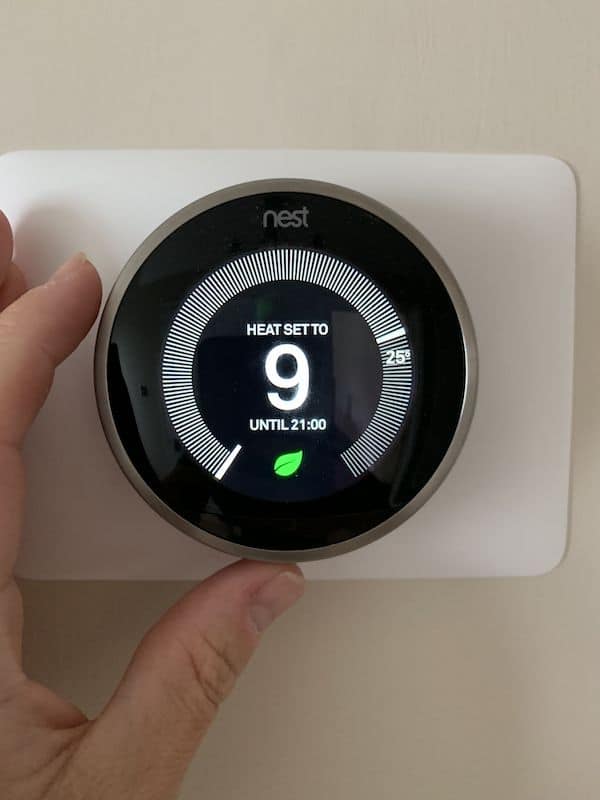
If you don’t have a digital thermostat, turn your standard thermostat down to zero and set your timer to OFF (or switch the boiler off).
Step 2: Bleed Your Radiators (Remove Trapped Air)
You can bleed only the radiators with cold spots, but it’s usually best to run through all radiators so you clear air from the whole system.
Place a towel under the bleed valve, insert the key, and turn anti-clockwise slightly until you hear a hiss. Once the hissing stops and water begins to appear, tighten the valve again (don’t overtighten).
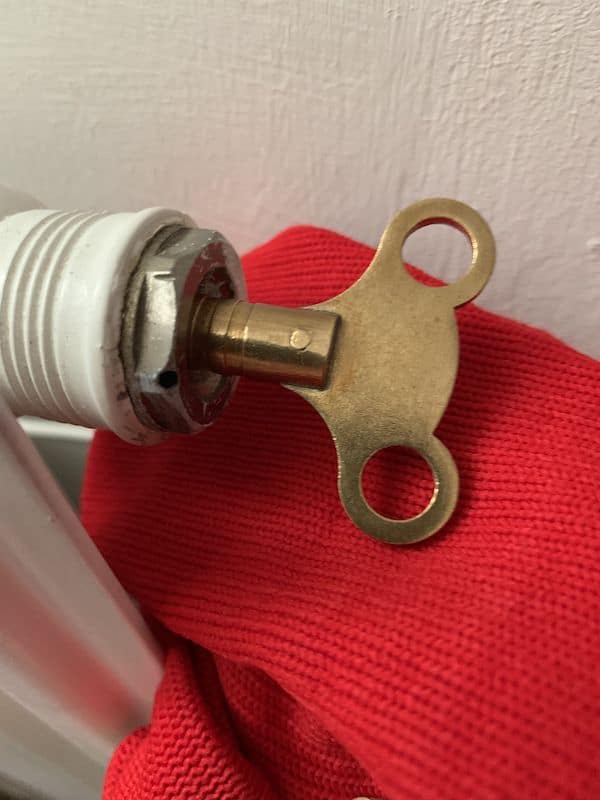
- Turn key anti-clockwise a small amount (do not fully open)
- Allow air to escape
- Catch any water with a towel
- Re-tighten once air has escaped
Repeat for every radiator in the house.
Step 3: Open Up All TRVs Fully
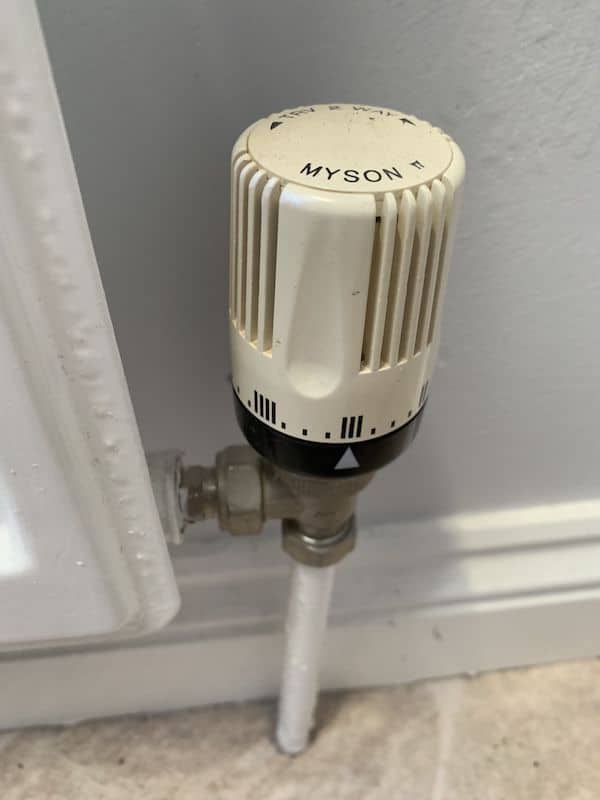
Most homes have TRVs (Thermostatic Radiator Valves). These control how hot each radiator gets. For balancing, you want them fully open so they don’t interfere with flow.
- Turn TRVs fully open (usually anti-clockwise to the highest number)
- Do this for ALL radiators
- Read Step 4 first—because the valve on the other side also matters
Step 4: Close the Lockshield Valve (Then Open Slightly)
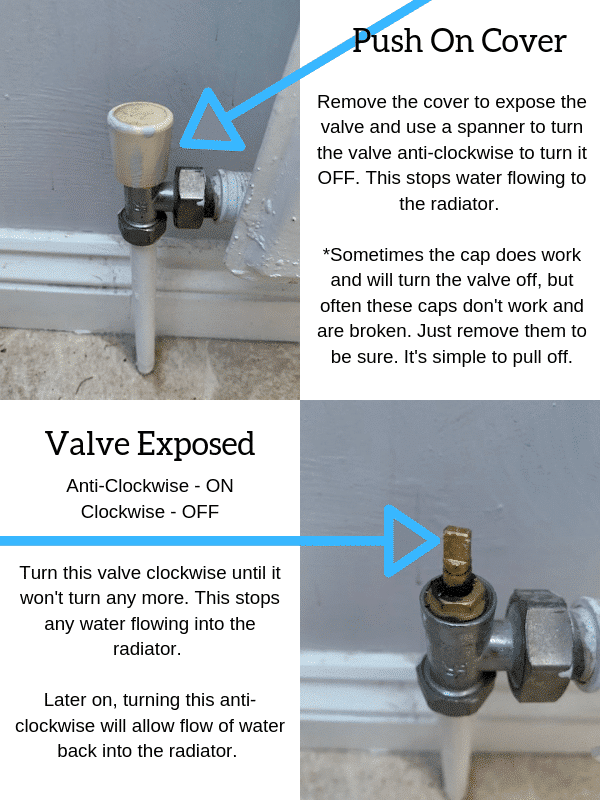
On the opposite side of the radiator to the TRV is the lockshield valve. This is the valve you adjust to balance flow. It often has a plain cap or cover (sometimes push-on). Many require a spanner to turn.
- Turn lockshield clockwise fully until it stops (OFF)
- Then open it anti-clockwise half a turn as a starting point
- Do this on every radiator in the home
Step 5: Turn Heating ON and Observe How Radiators Warm Up
Turn the boiler back on and set the thermostat to your normal heating temperature. As the system warms up, pay attention to which radiators heat first and which are last.
Tip: Radiators nearest the boiler often warm up first.
- Make a list of radiators in order of heat-up (warmest first → coolest last)
- The hottest is often closest to the boiler
- The coolest is often furthest away
- Balancing adjustments usually start at the hottest radiator first
Step 6: Turn Heating OFF and Let Radiators Cool
Turn the thermostat down again (or switch the boiler off) and wait for radiators to cool. Balancing is easier and more accurate when the system isn’t piping hot.
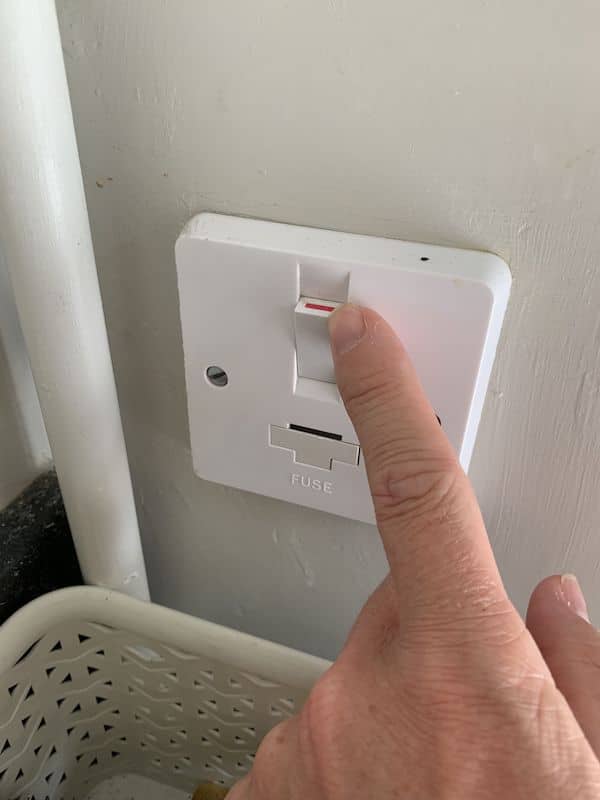
Step 7: Turn Heating ON and Start Balancing (Lockshield Adjustments)
Now you’ll balance the system by adjusting lockshield valves in order—starting with the radiator that heats up first (usually nearest the boiler) and moving toward the last.
- Turn heating back on and go to the first radiator on your heat-up list
- Close the lockshield fully, then open it a small amount (around 1/4 turn)
- Move to the next radiator and repeat, opening it slightly more than the last
- Continue through the home until you reach the final radiator (often furthest away)
- For the final radiator, open the lockshield further to allow more flow
What you’re aiming for: radiators closer to the boiler should have a more restricted lockshield setting, and radiators further away should have a more open lockshield setting.
Step 8: Make Final Adjustments and Enjoy Even Heating
Once balanced, those previously cool radiators should heat more evenly, reducing cold spots and improving comfort throughout the house.
In simple terms:
- Restrict flow to radiators closest to the boiler (open lockshields only slightly)
- Allow more flow to radiators furthest away (open lockshields more)
Finally, set your TRVs to suit each room’s preferred temperature.
When to Call a Heating Engineer
If balancing doesn’t solve the problem, you may have issues such as sludge build-up, weak circulation, a failing pump, or system design problems. If you’re still getting cold radiators after bleeding and balancing, it may be time for a professional check.
Local help: If you’re in Northamptonshire (or surrounding areas) and want support with radiator balancing, powerflushing, or boiler performance, contact EJ Wheldon for advice.